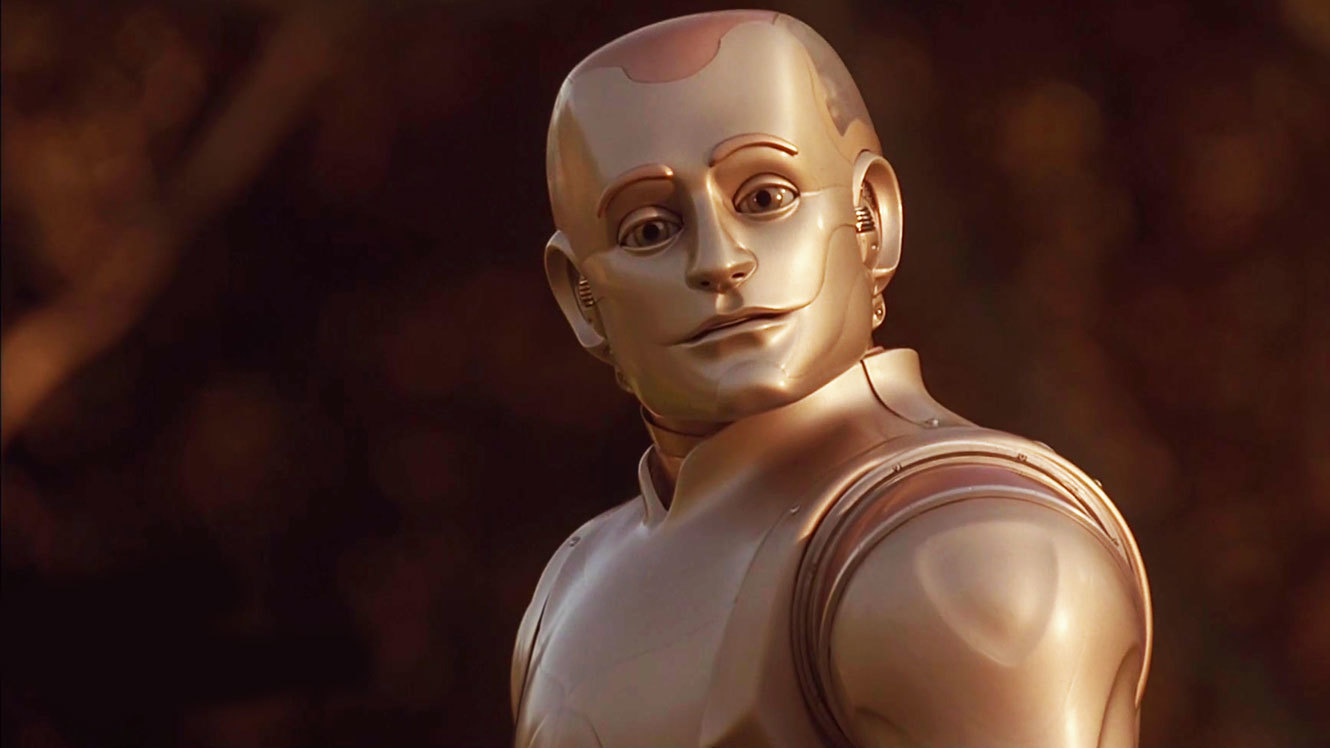
Robots are, in their original conception, artificial humans. The word itself comes from the Czech robota, meaning forced labour or drudgery — the kind of repetitive, physical work that humans do but would rather not. The first robots were built to take over exactly that: the mindless, repetitive, physically demanding tasks that wear people down.
Now add artificial intelligence. Suddenly the machine does not just repeat — it learns. It adapts. It makes decisions. In some narrow but meaningful sense, it begins to think.
So: does that make it more human? The answer, I believe, is no. And the reason why tells us something important — not just about machines, but about what it actually means to be human.
Part 1: What Robots Are Actually Good At
Before we talk about what robots cannot be, it helps to be honest about what they are extraordinarily good at.
A robot on an automotive assembly line repeats the same welding operation 86,400 times in a day without fatigue, distraction, or variation. The weld at 4:00 AM is identical to the weld at 4:00 PM. There is no Monday morning effect, no Friday afternoon drift. The robot does not get hungry, does not get bored, and does not cut corners when nobody is watching.
That consistency is remarkable. And it is deeply inhuman.
Humans are variable by nature. Our performance fluctuates with sleep, mood, motivation, and attention. We make errors of boredom, errors of distraction, errors of assumption. We also make creative leaps, intuitive corrections, and judgment calls that no explicit rule could have anticipated.
The robot's strength — perfect, tireless repetition — is the precise inverse of what makes humans interesting. This is not a criticism of robots. It is a description of why they are useful. The goal was never to build something human. It was to build something that could do what humans find tedious, dangerous, or physically impossible.
Part 2: The Chisel and the Caveman
Every generation believes its tools are uniquely transformative. In some ways, every generation is right.
The chisel let a caveman shape stone he could not break with his bare hands. Suddenly, shelter became more permanent. Tools became more refined. Art became possible. The chisel did not make the caveman more human — the caveman was already human. But it extended what a human hand could do by an order of magnitude.
The lathe let a machinist create cylindrical precision that no hand-filing could achieve. The steam engine replaced muscle with mechanical force. The computer replaced laborious calculation with instant arithmetic. Each of these tools amplified human capability without replacing human judgment.
AI is the next chisel.
What it amplifies is not physical reach or mechanical force, but cognitive processing — the ability to find patterns in large amounts of data, to make connections across variables that would take a human analyst months to examine, and to do this continuously, without fatigue.
In industrial automation, this is already producing results. AI-assisted PID tuning is a useful example. Tuning a PID controller — setting the proportional, integral, and derivative gains that govern how a servo drive responds to position or force error — has traditionally been a skilled, iterative process. An experienced engineer develops intuition over years of practice. AI tools can now analyse the system's step response, identify the process model, and suggest starting gain values that would have taken days of manual iteration to arrive at. The engineer still makes the final judgment. But the chisel has made the carving faster.
Part 3: What AI Can Do for Industrial Machines
It is worth being specific about where AI is genuinely useful in industrial automation, because the field is full of overclaiming on both sides.
Anomaly detection
A machine learning model trained on thousands of normal production cycles can detect subtle deviations that would take a human analyst hours to spot in data logs. Bearing wear, tool degradation, material inconsistency — these show up as slight changes in vibration signatures, current draw profiles, or force curves long before they cause a failure. AI-based condition monitoring can flag these early, enabling predictive maintenance rather than reactive repair.
Process optimisation
In pressing and forming applications, the relationship between process parameters (speed, force profile, dwell time) and output quality is complex and nonlinear. AI can explore this parameter space far more efficiently than design-of-experiments approaches, finding combinations that improve yield without requiring a human to manually iterate through hundreds of trials.
Adaptive control
Traditional control systems operate on fixed parameters. If the material properties change — a different batch of steel with slightly different hardness — the controller does not know. AI-based adaptive control can detect the change through process feedback and adjust parameters in real time, maintaining quality across material variation.
Natural language interfaces
This is perhaps the most underrated application in industrial settings. AI language models can make machine configuration and diagnostics accessible to operators who are not control engineers. Instead of navigating complex parameter menus or interpreting cryptic fault codes, an operator can describe what they are observing in plain language and receive a structured diagnostic response.
In all of these applications, AI is functioning as a tool — an extremely sophisticated one, but a tool nonetheless. The human defines the objective, validates the output, and retains the authority to override.
Part 4: What AI Cannot Do
Here is where the science fiction version of AI and the engineering reality diverge most sharply.
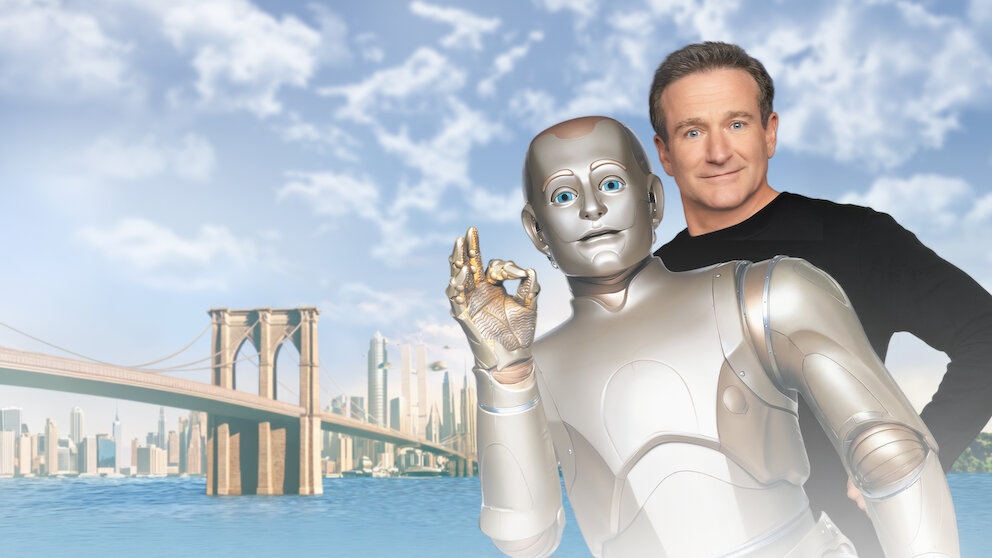
AI does not have intent. Every AI system has an objective function — a mathematical definition of what "good" looks like. It optimises toward that objective. But it did not choose the objective. A human chose it. And choosing objectives — deciding what matters and why — is a fundamentally human act. AI can optimise brilliantly within a defined objective. It cannot define the objective. It has no why.
AI does not understand context the way humans do. A PID auto-tuner can suggest gains based on the system's step response. It cannot know that the machine will be operated by a technician with six months of experience in a facility with inconsistent power supply quality in a climate where ambient temperature swings 20 degrees between morning and afternoon. An experienced engineer factors all of this in, intuitively, before they even run the first test.
AI does not feel consequences. When a poorly tuned controller damages a machine, the engineer who tuned it feels it. There is professional responsibility, personal accountability, and genuine concern about what went wrong and how to prevent it. These feelings are not inefficiencies to be optimised away. They are the mechanism by which human judgment improves over time. An AI system that produces a bad output simply produces a bad output. It will produce the same bad output again in the same conditions unless a human retrains it.
AI cannot be creative in the generative sense. AI can generate novel combinations of things it has seen. But it is not creative in the sense that a human engineer is creative — it is not making a leap based on intuition, analogy, or an insight that comes from understanding the problem at a level deeper than the training data represents. The engineer who looks at a failing pressing process and thinks "this feels like a resonance problem, let me check the mechanical natural frequency" is making a connection that goes beyond pattern matching in historical data.
Part 5: The Real Question
The question "can AI make robots real humans?" is, on reflection, the wrong question.
The right question is: what do we want machines to be?
We built robots to do what humans find tedious, dangerous, and physically exhausting. We succeeded. We are now adding AI to make machines more capable of handling variation and complexity. We are succeeding at that too. But at no point in this progression is the goal to make the machine human. The goal is to make the machine more useful — which means more capable of serving human purposes.
A robot with AI is a better tool. A chisel made from hardened steel is better than one made from flint. A lathe with CNC control is better than a manual lathe. A control system with AI-assisted tuning is better than one tuned entirely by hand. In each case, "better" means more capable of doing what the human needs it to do.
Humanity is not a capability to be engineered. It is what does the engineering.
Part 6: What This Means for How We Build Machines
For those of us who design and build industrial machines, this distinction has practical implications.
It means that AI should be integrated as an assistive layer — one that extends the engineer's capability without removing the engineer's judgment from the loop. It means that control systems should remain auditable: a human should always be able to understand why the machine did what it did and override it when necessary. It means that the objective functions we encode into our AI systems should be chosen carefully, with full awareness that the machine will pursue them without moral judgment.
And it means that the engineer's role does not diminish as machines become more capable. It shifts. The work moves from low-level parameter tuning toward higher-level problem definition, system architecture, and the ongoing exercise of judgment about whether the machine's behaviour aligns with the real-world purpose it is meant to serve.
The caveman with the chisel still had to decide what to carve. That decision — the vision, the purpose, the standard of completion — was human then, and it remains human now.
Conclusion
Can AI make robots real humans? No. And it was never trying to.
What AI can do is make robots dramatically more capable — more adaptive, more self-correcting, more useful across a wider range of conditions. That is genuinely valuable, and the industrial applications are only beginning to be understood.
But capability is not humanity. A thermostat responds to temperature. A language model responds to text. A servo controller responds to encoder feedback. None of them — regardless of how sophisticated the response — are experiencing any of it.
Real humans are not defined by what they can compute or how quickly they can optimise. They are defined by the fact that they care about the outcome — and that caring itself cannot be reduced to an algorithm.
The chisel was a remarkable tool. It did not make the caveman less human. It gave him the means to express something more of what he already was. That is what we should be asking AI to do.
Interested in how AI tools are being applied in industrial servo control and motion automation? Reach out or leave a comment below.
Comments